
The first time I stood at Pewit’s Nest near Baraboo with no one else around, I understood what off the beaten path Wisconsin really means. It was a Tuesday in late May, water rushing through the sandstone gorge, and I kept thinking about it: I’d driven Wisconsin backroads for years. Why did it take me this long to find this? That’s the thing about this state. The famous stuff gets the traffic. Door County, the Dells, the lakeshore in summer. But Wisconsin’s real character lives somewhere quieter, down roads without billboards, in parks without gift shops, at waterfalls most people drive right past.
Table Of Content
- Hidden waterfalls in Wisconsin most visitors never find
- Pewit’s Nest: the gorge you’ll keep to yourself
- Big Manitou Falls and Copper Falls: the northwoods payoff
- Willow Falls near Hudson: the Milwaukee-side underdog
- Ghost towns and the Wisconsin places time passed over
- How to explore Wisconsin’s abandoned sites without getting into trouble
- Off the beaten path Wisconsin: forest trails and secluded natural areas serious hikers overlook
- Parfrey’s Glen: Wisconsin’s oldest state natural area
- Newport State Park and Brunet Island: the quieter alternatives
- Lulu Lake: the surprise closest to Milwaukee
- Roadside oddities and only-in-Wisconsin stops worth the detour
- How to plan an off-the-beaten-path Wisconsin road trip
- Best seasons for Wisconsin’s secret spots
- Safety, access rules, and a few non-negotiables
- Where to stay, where to eat, and where to go deeper
- Start with one weekend, then go from there
- Related posts
This guide is the master map I’ve been building at Near and Unknown across years of that kind of driving. It covers four categories: hidden waterfalls, ghost towns and abandoned places, secluded forest trails, and roadside oddities worth the detour. Each section points you toward the places themselves and toward the deeper, route-specific Near and Unknown guides where you’ll find GPS coordinates, parking notes, and my personal photos from each visit. Use this as your starting point, not your finish line.
Hidden waterfalls in Wisconsin most visitors never find
Wisconsin has more waterfalls than most people realize, and the ones worth finding are rarely on the first page of a travel search. The three below span the state from the western edge of Driftless Country to the far northern tip near Lake Superior. Each one earns the drive, and each one qualifies as a genuine secret spot Wisconsin visitors consistently overlook.
Pewit’s Nest: the gorge you’ll keep to yourself
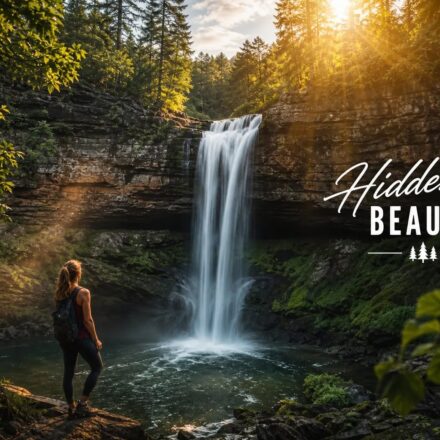
Pewit’s Nest sits just off County Road W outside Baraboo, and it punches well above its size. The sandstone gorge is tight and dramatic, with a small waterfall feeding plunge pools that glow green in late spring light. The trail is short, under a mile round-trip, but the footing is uneven and the rocks stay slippery even in dry weather. Sturdy shoes aren’t optional here. Spring snowmelt typically peaks flows in April and May, with good volume often carrying through early July depending on rainfall; by midsummer, the flow can shrink to a trickle. Parking is limited, reports from visitors and local sources vary from roughly 8 to 20 spaces, and roadside parking isn’t permitted, so arriving early on weekends is genuinely important.
Big Manitou Falls and Copper Falls: the northwoods payoff
Big Manitou Falls at Pattison State Park near Superior is Wisconsin’s tallest waterfall, dropping approximately 165 feet according to the Wisconsin DNR. Superior sits far enough from the state’s population centers, roughly five to six hours from Milwaukee, that it qualifies as one of the more off-the-grid Wisconsin destinations most residents never reach. Pair it with Copper Falls State Park near Mellen, roughly an hour and a half southeast of Pattison. Driving both parks in a single day requires significant time behind the wheel, but building a northwoods weekend around the two makes the miles worthwhile. Fall is the peak season for both: late September and early October wrap the trails in birch and maple color that frames the water and the canyon walls perfectly.
Willow Falls near Hudson: the Milwaukee-side underdog
For readers based in Milwaukee or Madison, Willow Falls in Willow River State Park near Hudson is one of the most accessible lesser-known waterfalls on this list. The trail is short and family-friendly, admission is covered by a standard state park pass, and the park itself rarely appears on anyone’s must-do list despite sitting near the Twin Cities metro. Spring snowmelt in April and May produces the most dramatic flow. If you’ve been sleeping on this one, that’s the window to fix it. The Near and Unknown Willow Falls day-trip guide has the full route and what to do nearby in Hudson afterward.
Ghost towns and the Wisconsin places time passed over
Wisconsin’s abandoned places don’t look like the cinematic ruins of the American West. They’re quieter than that. A crumbling limestone foundation at the edge of a cornfield. A cemetery with stones that lean into the second-growth forest. A stretch of trail that used to be a railroad line serving an industry that no longer exists. These unusual things to do in Wisconsin require you to pay attention, and that’s exactly what makes them worth the effort.
Pendarvis in Mineral Point (Iowa County) offers a well-documented experience: the Wisconsin Historical Society has restored this Cornish mining settlement into a publicly accessible historic site. For a more industrial feel, the former Badger Army Ammunition Plant near Baraboo has been partially converted into the Sauk Prairie State Recreation Area, with sections open to visitors and remediation areas that remain closed. Both are documented public sites with clear access, always verify current operating hours and any entry requirements directly with the managing agency before you go.
How to explore Wisconsin’s abandoned sites without getting into trouble
Many of the most atmospheric sites in Wisconsin sit on or near private land, and the line between a legally accessible ruin and a trespassing situation can be unclear on the ground. Verify land status before you visit. If a site isn’t a named park, marked trail, or historical society property, assume you need to confirm access before you go. The Wisconsin DNR and county land offices are the right starting points for checking.
The Leave No Trace principles apply here more seriously than at a developed park. Nothing gets taken, nothing gets moved, and the places you find stay findable for the next person. Spring is also worth flagging: trail closures at DNR properties and state natural areas can be triggered by soft trail conditions after snowmelt, so checking current status before a late-March or April visit is a smart step rather than an optional one.
Off the beaten path Wisconsin: forest trails and secluded natural areas serious hikers overlook
The most crowded trailheads in Wisconsin are crowded for a reason, the destinations are genuinely good. But there are alternatives for every popular trail in the state, and most of them sit within a short drive of the busier trailheads.
Parfrey’s Glen: Wisconsin’s oldest state natural area
Parfrey’s Glen near Merrimac (County Road DL) was Wisconsin’s first designated State Natural Area, and it earns the title. The trail runs through a narrow canyon with moss-covered sandstone walls and a stream that you’ll cross multiple times on the mile-and-a-half route. Plan for wet feet unless you’re wearing waterproof footwear. Per Wisconsin DNR guidance, the trail is not stroller-accessible and dogs must be leashed; the uneven footing demands focus rather than scenery-gazing. Late spring delivers the deepest green on the canyon walls; mid-October brings a foliage contrast that makes the short walk feel like a completely different place. The Near and Unknown Parfrey’s Glen guide has parking details and current access notes.
Newport State Park and Brunet Island: the quieter alternatives
Newport State Park sits at the tip of Door County and is the county’s least-visited major park by design. It’s a designated dark sky preserve with backcountry camping and trails where you can hike a full Tuesday in October without hearing another voice. Compare that to Peninsula State Park on a summer weekend, and the choice becomes clear for anyone who wants the Door County landscape without the door-to-door traffic.
Brunet Island State Park near Cornell sits at the confluence of the Chippewa and Fisher rivers and is almost entirely unknown outside the Chippewa Valley. It’s a river island park, which means the water defines the experience in a way most Wisconsin state parks can’t match. Both are strong choices for travelers who love Wisconsin’s natural spaces and are ready for something past the standard list.
Lulu Lake: the surprise closest to Milwaukee
About 35 minutes southwest of Milwaukee, Lulu Lake is the first offbeat Wisconsin attraction I recommend to Milwaukee-area readers who think they’ve already found everything nearby. The Nature Conservancy manages the property, which means public access is limited and advance booking is required for visits. That planning step keeps the crowds down, and the payoff is a glacially formed kettle lake with no visible development on its shoreline. On a clear fall morning, it looks like a place that exists three hours further north than it actually does. The Near and Unknown Lulu Lake access guide walks through exactly how to book and what to bring.
Roadside oddities and only-in-Wisconsin stops worth the detour
Some of the best stops in Wisconsin aren’t waterfalls or forest trails. They’re the places that make you pull over and say, “Wait, what is that?” These are the spots that belong on any honest list of unusual things to do in Wisconsin.
Cherney Maribel Caves Park in Maribel (County Road R) is one of Manitowoc County’s genuine surprises: a cluster of limestone caves and sinkholes on public county land with free admission and guided cave tours running on the third Sunday of each month from May through October. It’s genuinely eerie on a cool fall morning. Cave of the Mounds near Blue Mounds is the more polished alternative, with guided tours and consistent access from Madison, making it the right call if you want a guaranteed experience rather than an atmospheric one.
Grandad Bluff in La Crosse delivers a Mississippi River panorama that rivals anything in the upper Midwest, and it’s accessible for free with a short drive to the overlook. Contrast that with Witches Gulch near Dell Prairie, a narrow sandstone canyon commonly accessed via Wisconsin River boat tours, that built-in adventure factor makes it one of the few roadside-adjacent experiences in the state that actually feels remote. The Near and Unknown guide to western Wisconsin scenic drives covers both with route notes and nearby stops.
How to plan an off-the-beaten-path Wisconsin road trip
Best seasons for Wisconsin’s secret spots
Timing matters more for these places than it does for a developed tourist attraction. Waterfalls peak in April and May on snowmelt and again in September and October when fall color frames the water and crowds are manageable. Cave sites are accessible year-round but earn their best atmosphere on fall weekdays when summer visitors have cleared out. Forest trails shine in late May through June when the green is deepest, and again in late September for foliage.
July and August bring visitors even to lesser-known sites, higher insect pressure across the northwoods, and lower waterfall flows at secluded places like Pewit’s Nest. If midsummer is your only option, lean toward cave sites and the Lake Superior corridor, where temperatures stay cooler and the crowds haven’t yet discovered the northernmost parks.
Safety, access rules, and a few non-negotiables
Check trail closures with the Wisconsin DNR before driving to any State Natural Area or state park trailhead, especially in spring. Verify land status for ghost town and rural sites before leaving the car. Pack out everything you pack in. For remote northern destinations like Pattison State Park or Copper Falls, tell someone your route, check the weather 48 hours out, and plan for limited cell coverage. The Driftless Area and northwoods both have long stretches where your phone becomes a camera and nothing else.
Where to stay, where to eat, and where to go deeper
Each region has a natural base town. Baraboo anchors the Pewit’s Nest and Parfrey’s Glen loop. Superior or Ashland covers the northwoods waterfall circuit. Hudson is the hub for Willow Falls. La Crosse puts you within reach of Grandad Bluff and the western Wisconsin scenic drives. Maribel or Green Bay works for the cave country cluster in Manitowoc County.
Each destination in this guide has a deeper Near and Unknown article with exact parking details, seasonal photos, and my personal notes from visiting in person. Use this overview to pick your category and your region, then pull up the specific guide before you leave the driveway. That’s how a trip to an unfamiliar place becomes a trip you actually know how to take.
Start with one weekend, then go from there
What makes off the beaten path Wisconsin different from the highlight-reel version of the state is that it asks something of you. A little research, a longer drive, a willingness to arrive at a trailhead and not know exactly what you’ll find. The reward is a state that most people who live here have never actually seen.
These places are within a few hours of most Wisconsin and Midwest readers. Many are free to visit, and most of the rest require nothing more than a standard state park pass, Willow River, Pattison, Newport, and Brunet Island among them. The only thing separating you from them is knowing they exist, and now you do.
Pick one category from this guide. Build one weekend around it. The Near and Unknown destination guides referenced throughout will handle the planning details so you can focus on the part that matters: getting out there and seeing what Wisconsin looks like when you step off the main road.